Quartz Marble Price Guide: Costs, Colors & Buying Tips
Quartz Marble Price Guide: Costs, Colors & Buying Tips
Wed Jul 15 2026
Are you planning a dream kitchen remodel but find yourself completely overwhelmed by wildly fluctuating fabrication quotes? Finding the perfect balance between high-end luxury and everyday durability starts with understanding the actual quartz marble price and the technical factors that determine it.
Quartz marble has become one of the most sought-after materials in the world of modern interior design. It perfectly bridges the gap between a luxurious, high-end appearance and the practical, heavy-duty performance required by modern households and commercial projects alike. Engineered from a precisely balanced blend of high-hardness natural quartz crystals (around 93%) and advanced polymer binders and resins (around 7%), quartz boasts exceptional strength. This composition gives it outstanding resistance to scratches, stubborn stains, and daily wear and tear compared to many traditional natural stones.
Today, quartz is the premier choice for interior designers and homeowners. Its vast array of colors, striking patterns, and ability to inject a sleek, contemporary elegance into kitchens, bathrooms, and commercial countertops make it highly desirable. However, as its popularity continues to soar, one crucial question consistently arises for buyers: What is the actual quartz marble price? And what specific factors play a role in determining its final cost?
In this comprehensive guide, we will break down the structural pricing of quartz marble, explore the major variables that affect its market cost, and share expert tips to help you select the ideal option for your design needs and budget to achieve the absolute best value for your money.
How is the Kitchen Quartz Marble Price Calculated? (Industry Secrets)
Calculating the total cost of quartz countertops is often one of the most confusing parts of a kitchen renovation. This stage is frequently where misunderstandings occur between homeowners and fabrication workshops or design companies due to minor technical details that are not clarified upfront.
Because quartz is an engineered, high-performance material, calculating its cost requires a solid understanding of "industry trade secrets." Having this knowledge is essential to avoid unexpected surprises on your final invoice. Below is our detailed guide explaining how the quartz marble price is determined, the differences in measurement methods, and the hidden costs you must look out for.
Understanding the Difference: Linear Meter vs. Square Meter
Misunderstanding these two measurement units is the primary source of billing disputes. Some fabricators may exploit this confusion when discussing the quartz marble price with clients. Let us clarify the exact differences:
1. The Linear Meter (LM)
The linear meter is the most common, fair, and standard unit of measurement used to calculate the quartz marble price for kitchen countertops. When pricing by the linear meter, the fabricator measures only the running length of the countertop (in meters and centimeters) regardless of its width, provided that the countertop falls within the standard kitchen depth of 60 cm to 65 cm.
How is it calculated? If your kitchen countertop length measures exactly 3 meters and has a standard depth of 60 cm, you only pay for 3 linear meters.
Why is it used? Quartz slabs are manufactured in standard, pre-set widths. When cutting them for standard kitchen countertops, the yield depends almost entirely on the running length.
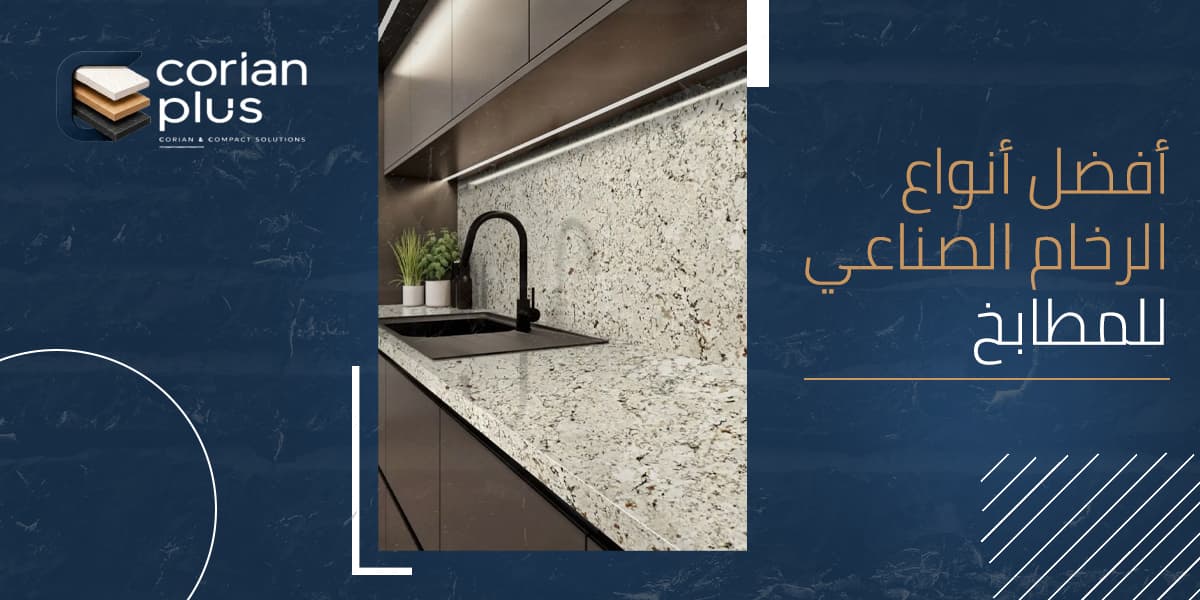
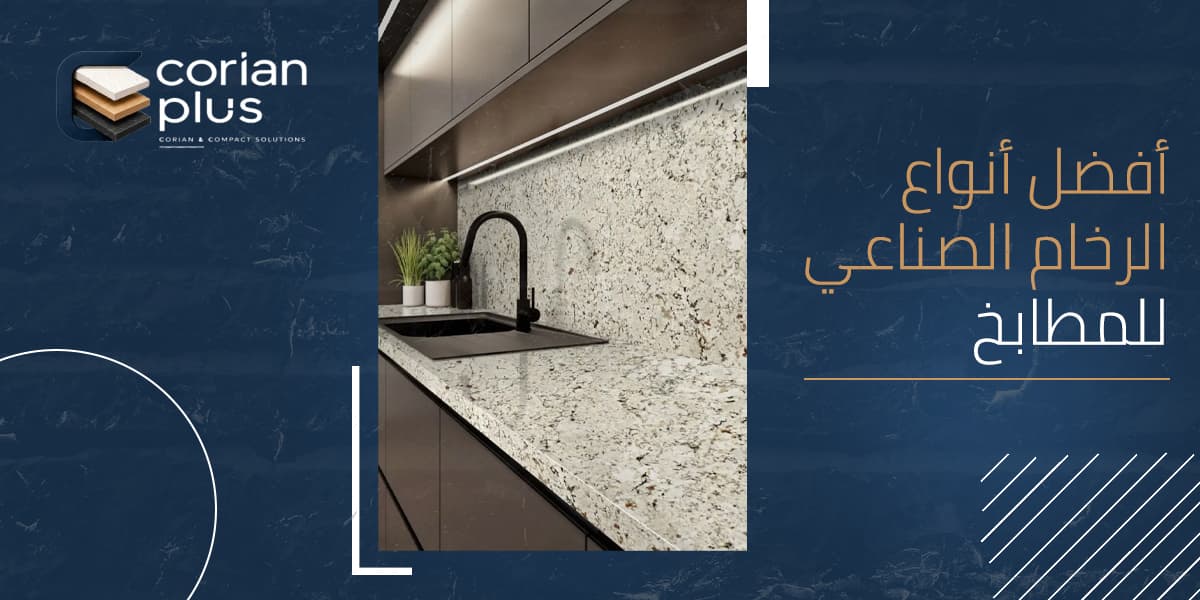
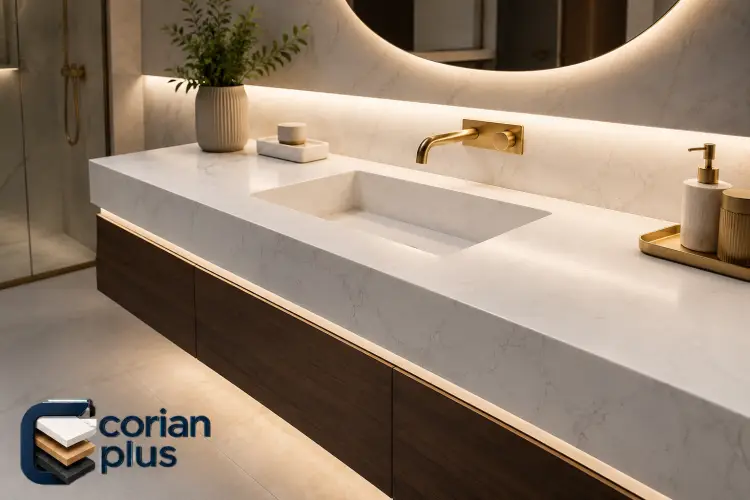
Explore modern designs: Discover the features and styles of Corian marble for kitchens that perfectly blend luxury and functionality.
2. The Square Meter (SQM)
The square meter measures the total surface area (Length $\times$ Width). In kitchen design, the quartz marble price is calculated using square meters only under specific circumstances:
The Backsplash (Wall Cladding): This is the protective quartz panel installed on the wall between your base cabinets and upper cabinets.
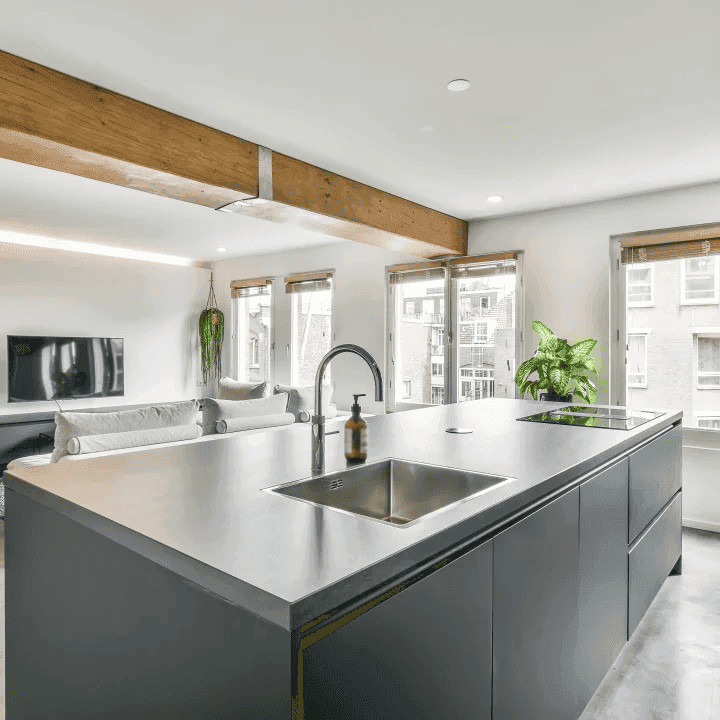
The Kitchen Island: If your design features a central island or breakfast bar with a custom depth exceeding 70 cm or 80 cm, linear measurement no longer applies. The fabricator must calculate the total area (Length $\times$ Width) to price the stone by the square meter.
Hidden Technical Add-ons That Affect the Total Price
It is vital to know that the initial quartz marble price per meter quoted by most showrooms usually covers only the raw stone slab and its basic straight cuts. There are several highly specialized fabrication and installation services that will increase your final estimate. You have the right to know these costs before signing any contract:
1. Sink Cutout Fabrication Costs (Undermount vs. Overmount)
Because quartz is incredibly hard and dense, cutting holes for sinks requires specialized diamond-tipped tools, heavy machinery, or computerized CNC routers to prevent cracking.
Overmount/Drop-in Sinks (Houd Lats): The sink rim sits directly on top of the quartz surface. Cutting costs for this style are relatively low because the raw, cut edges of the stone are completely covered by the sink's rim, requiring minimal sanding or polishing.
Undermount Sinks (Houd Saqet): The sink is mounted underneath the quartz countertop. This method costs roughly twice as much to fabricate. The technician must cut the quartz with extreme precision and spend hours sanding and polishing the exposed inside edges of the stone until they match the sink's shape flawlessly.
2. Built-in Cooktop Cutout Costs
Just like an undermount sink, a drop-in cooktop requires a custom cutout inside the quartz slab. This service is billed as a separate technical charge. Fabricators must follow the exact installation dimensions provided in your appliance manual. Cutting precise, rounded corners is necessary to eliminate structural stress points that could cause the slab to crack under thermal expansion.
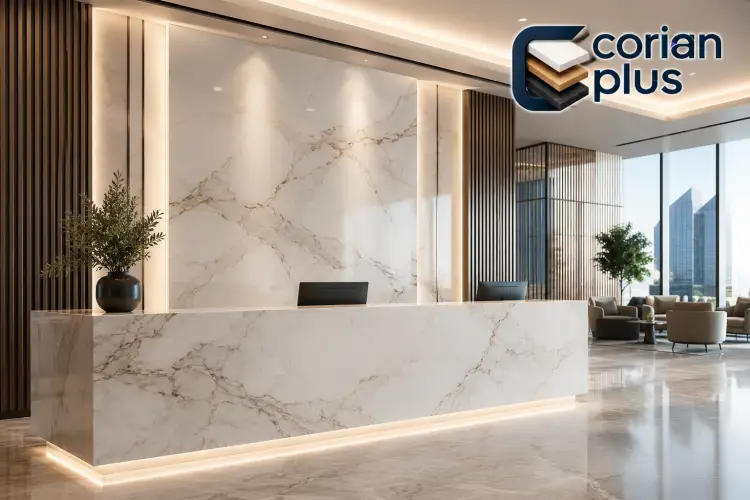
Ultimate guide: Browse the list of the Artificial Marble to find the most durable and stain-resistant material.
3. Edge Profiles (Halyat): Free vs. Premium Upgrades
The edge profile is the finished shape of the front edge of your countertop. The complexity of this design has a direct impact on the overall quartz marble price:
Standard Eased/Bevel Edge (Chaft Sekina): A simple, clean, slightly eased edge to eliminate sharp corners. This is the standard finish and is almost always included for free in the base price.
Half Bullnose or Full Bullnose: Fully rounding the edge of the stone for a softer look and better impact resistance. This profile requires additional machining and polishing, adding a premium fee per linear meter.
Mitered Edge / Double Edge (Takhana): Standard quartz slabs are 2 cm thick. If you want your countertop to look thick and substantial (e.g., 4 cm or 5 cm), fabricators cut a separate strip of quartz and join it to the main slab at a precise $45^\circ$ angle. This mitered apron creates a seamless, massive look. It is highly labor-intensive and adds a significant cost to the quartz marble price per linear meter.
4. Transportation and Hoisting Fees
Quartz slabs are incredibly heavy, rigid, and fragile if flexed during transport. If they are bent or twisted while being carried up narrow stairwells, they can crack.
If you live on a high floor (above the second or third floor) and your building's elevator or staircase is too narrow to fit a large slab, the installation team must use an external crane or hoist to lift the stone through a balcony or window. These crane fees, along with transport trucks equipped with specialized A-frame safety racks, are rarely mentioned in initial verbal quotes. Always clarify who will cover these delivery expenses.
Why Does the Quartz Marble Price Vary Between Companies?
If you shop around, you will notice a huge variation in the quartz marble price from one showroom to another, even for slabs that look identical. Since quartz is an engineered material, its price is determined by raw material purity, engineering standards, and installation quality:
1. Slab Thickness
Thickness directly dictates the structural integrity and market value of the material. Quartz is primarily sold in two thicknesses:
1.5 cm Thickness: The more budget-friendly option. It is ideal for wall cladding, vertical backsplashes, or light-use utility countertops. While some fabricators build up the front edge with a mitered profile to make it look thicker, it remains less resistant to heavy impacts.
2 cm Thickness: The international standard for high-quality kitchen countertops. It offers superior structural strength, easily handles daily kitchen tasks, and represents the best long-term investment and quartz marble price value.
2. Composition and Purity Quality
Engineered quartz should ideally consist of approximately 93% natural quartz aggregate and 7% polymer resins, binders, and pigments. To undercut competitors and lower production costs, some manufacturers reduce the quartz content and increase the percentage of cheap resin.
This imbalance leads to serious quality issues, including poor scratch resistance, low heat tolerance, rapid yellowing when exposed to light, and a gradual loss of surface shine. High-quality quartz retains its structural integrity, vibrant color, and polished luster for decades.
3. Installation and Craftsmanship Quality
An expensive slab of quartz can look terrible if installed poorly. This is where the difference between premium companies and cheap workshops becomes clear.
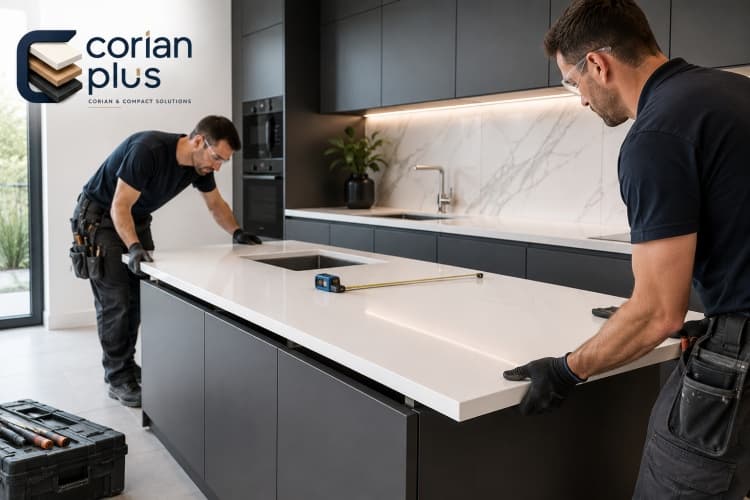
For instance, large L-shaped or U-shaped kitchens require joining multiple slabs. A professional fabricator uses specialized suction seam-setters and color-matched epoxy adhesives to create seamless joints that are virtually invisible to the naked eye and smooth to the touch.
Expert Tips from corianplus to Protect Your Renovation Budget
Smart budgeting does not mean searching for the absolute cheapest quartz marble price on the market. True savings come from allocating your funds toward durability and structural quality while cutting out unnecessary premium features.
At corianplus, we leverage our deep industry experience to help you make informed decisions, ensuring you get a stunning, high-performance kitchen countertop that fits your budget:
Incorporate Smart Material Mixing: If you want matching countertops and backsplashes, you do not need to use thick stone everywhere. Use robust 2 cm slabs for the main work surfaces where durability is crucial, and choose lighter 1.5 cm slabs for the wall backsplash where there is no physical impact. This simple adjustment can significantly reduce your total quartz marble price without compromising your design.
Optimize Your Layout Around Slab Sizes: Quartz slabs are manufactured in standard industrial dimensions. Making slight adjustments to your kitchen layout can maximize slab yield, minimizing waste material that you would otherwise have to pay for. The design team at corianplus carefully analyzes your layout to ensure we utilize every square inch of the slab.
Stick to Clean, Modern Edge Profiles: Choosing straight, eased, or beveled edges gives your kitchen a sleek, contemporary look. These profiles are highly popular in modern design and are typically included in the base cost, saving you from the high fabrication surcharges associated with complex mitered or rounded edges.
At corianplus, we don't just supply stone; we provide end-to-end solutions that cover design consultation, precise fabrication, and professional installation. We are dedicated to offering the best quartz marble price values by combining certified raw materials, impeccable craftsmanship, and seamless joint finishes.
If you are planning to renovate your kitchen or start a new interior design project, simply send us your initial dimensions or architectural drawings. Our team at corianplus will provide a detailed, itemized quote to help you find the best material for your budget.
Frequently Asked Questions (FAQs)
Is quartz more expensive than natural granite?
In most cases, yes. The quartz marble price is generally higher than standard natural granite, particularly for high-quality imported brands. This price difference is due to the advanced manufacturing technologies required to produce quartz, as well as its superior stain resistance, color consistency, and low-maintenance qualities. However, highly exotic or rare granites can sometimes cost more than quartz.
Does the estimated price per meter include delivery and installation?
This depends entirely on the supplier's pricing policy. Some companies include only the raw slab, while others bundle fabrication and installation. Additional services—such as sink cutouts, transport, or hoisting cranes—are typically billed separately. To avoid unexpected costs, always request a fully detailed, itemized quote before committing to a purchase.